
Continuing Power of Attorney
A document in which an adult of sound mind decides in advance who will manage his or her affairs, and according to which rules, if and when a day comes when he or she can no longer decide. It is made under section 32B of the Legal Capacity and Guardianship Law, 5722-1962, signed before an advocate certified for this purpose (section 32N(a) of the Legal Capacity and Guardianship Law), and deposited with the Administrator General.
Continuing power of attorney in a 30-second video

The video loads from YouTube only after you click. Go to the video and transcript page
In the video: In a continuing power of attorney you choose in advance who will act on your behalf if one day you are unable to, and it is advisable to appoint a substitute attorney as well. The heart of the document is the advance directives: where to live, what matters in your care and how to manage your money. You sign before an advocate certified for this purpose and deposit the document with the Administrator General.
A continuing power of attorney is a document in which an adult of sound mind decides in advance who will manage his or her affairs, and according to which rules, if and when a day comes when he or she can no longer decide. The document is made under the Legal Capacity and Guardianship Law, signed before an advocate certified for this purpose, and deposited with the Administrator General.
The practical advantage is simple: a person who has made a continuing power of attorney has chosen the people and the limits personally. A person who has not, and whose condition changes, leaves the family with court proceedings for the appointment of a guardian, which are longer, more expensive and subject to ongoing supervision, and in which the decisions are not his own but the court's.
When to make a continuing power of attorney
- When you want to decide in advance who will handle your property, personal or medical affairs, and according to which directives.
- When there are several relatives in the family and you want to prevent disagreement over who will decide.
- When there are assets, investments or a business that must continue to be managed even when the owner cannot.
While the principal is of sound mind. This is not general advice but a legal condition: a person who does not understand the meaning of the document cannot make it, and then only the route of guardianship remains. If there is any doubt about capacity, the law requires a professional opinion before signing, and in families with potential for disagreement it is better to obtain such an opinion in advance, even where there is no real doubt.
The process
- Questionnaire and explanatory meeting. You will be sent a questionnaire to complete before the meeting, in the same order as the form itself. Completing it in advance considerably shortens the meeting and focuses it on decisions rather than on collecting details. The meeting is held with the principal alone, without the attorneys present. This is a requirement of the law, designed to ensure that the wishes expressed are the principal's own. At the meeting all the decisions are reviewed: who the attorney is, which matters, the relationship between the attorneys, coming into force, the advance directives, investments, the person to be informed and the special authorisations.
- Drafting. I draft the advance directives and the authorisations in accordance with what was said at the meeting, and send you a draft for review.
- Signatures. The principal signs after receiving the explanation, and each attorney signs his or her consent after receiving an explanation. I sign the declarations and the authentication of the signatures.
- Deposit and delivery. The document is entered into the Administrator General's online system, and the signed, scanned document is submitted for deposit. Confirmation of deposit is received within up to about three working weeks. At the end of the process, you and the attorneys receive a letter explaining what has been deposited, how to activate the power of attorney when the need arises, and what the reporting obligations are.
What to bring to the meeting
- The identity card of the principal and of each attorney.
- The principal's personal email address and mobile phone number (not those of an office or of a family member).
- The details of the attorneys and their relationship to the principal.
- A preliminary list of assets and accounts.
- If there is a will, it is important to say so in advance so that the directives do not conflict with it.
Timing and cost
Timetable: the meeting and the drafting are completed within a few days, depending on complexity. After the signatures the document is submitted for deposit, and confirmation of deposit from the Administrator General is usually received within about three working weeks.
Cost: this is the most common question, and the answer differs from what people usually assume about notarial services. The fee for preparing a continuing power of attorney is not fixed by regulation and is not the same with every advocate, unlike the notarial fee, which is fixed by law. The document is not a notarial certificate but a document prepared by an advocate who has completed the dedicated certification of the Administrator General, so the fee is an advocate's professional fee.
What the fee actually covers: an explanatory meeting and clarification of wishes; drafting the advance directives, which are the longest and most significant part of the document; completing the official form; having the principal and the attorneys sign; and depositing the document in the Administrator General's system. The cost varies mainly with the scope of the advance directives, the number of attorneys and the complexity of the division of powers between them.
Two things worth knowing before you compare prices: a document made without advance directives is cheaper to prepare, but it is precisely the document that leaves the attorney without guidance when guidance is needed; and depositing the document with the Administrator General involves no fee. For an exact quote for your case, please call; the first conversation is to clarify your needs and involves no commitment.
Continuing power of attorney compared with guardianship
| Continuing Power of Attorney | Guardianship | |
|---|---|---|
| Who chooses | The principal, in advance, while of sound mind | The court, after the event |
| When it is decided | Before the need arises | After the need has arisen |
| The directives | Written in advance by the principal | Set by the court and under its supervision |
| The procedure | A document prepared at the office and deposited | Legal proceedings, usually with a social worker's report |
What you should know about a continuing power of attorney
Three types of matters, and you can choose
A continuing power of attorney can apply to property matters, personal matters and medical matters, in any combination. You can also appoint different people for different matters, for example one family member for medical matters and another for financial matters.
For each type of matter, the attorney can be authorised for all matters, for specific matters set out in the document only, or for all matters except those excluded. The more precise the definition, the smaller the chance of disagreement in the future.
Who can act as an attorney
The law sets conditions of eligibility, and the disqualification of an attorney is often discovered too late. An attorney must be an adult and must not have had a guardian appointed for him. In property matters, he cannot be a person who has been declared bankrupt and has not received a discharge, or a seriously restricted bank customer (section 32C of the Legal Capacity and Guardianship Law).
In addition, a person who provides the principal with care for payment, or with accommodation for payment, cannot act as an attorney unless he is a relative. Nor can the advocate who prepares the power of attorney be appointed. One person cannot act as attorney for more than three principals who are not his relatives.
More than one attorney
You can appoint several attorneys and determine the relationship between them. The most practical arrangement is "jointly and severally", under which each of them may act alone. An appointment "jointly" (section 32D of the Legal Capacity and Guardianship Law) requires all of them to sign every act, which sounds safe but in practice makes day-to-day management very difficult.
In any event, it is advisable to appoint a substitute attorney (section 32E of the Legal Capacity and Guardianship Law). A single attorney with no substitute is one of the most common problems: if he dies, resigns or loses capacity, the power of attorney ceases to have effect and the family returns to guardianship proceedings, exactly what you sought to avoid.
When the power of attorney comes into force
The power of attorney does not operate from the day it is signed. It comes into force only when the principal ceases to be capable of understanding the matter and making decisions in it. By default, this is determined by a professional opinion.
Under the regulations, the opinion on coming into force must be given by a physician or a psychologist with recognised specialty status. The principal may set another method for determining when the power of attorney comes into force, but that method cannot be left to the decision of the attorney alone. For property matters only, it may be stipulated that the power of attorney will come into force immediately or on a specified date.
A point that is easily missed: before the power of attorney comes into force there is a duty to give notice. The principal specifies in the document who is to be notified, and it is advisable to name an alternate person as well.
Advance directives, the heart of the document
The most important part of a continuing power of attorney is not the list of powers but the advance directives. Here the principal writes what he or she wants to happen: where to live, under what conditions, what to do with the home, how to manage money, what matters in medical care, and what he or she expressly does not want.
A well-drafted advance directive is the difference between a document that guides the attorney and a document that leaves him guessing. The deposit system limits the number of characters in each section, so long directives are written in a separate annex attached to the document.
Money and investments
This subject is almost always overlooked, and it has a direct financial impact. If the principal has not written an advance directive on the investment of funds, the attorney is restricted to the investment channels prescribed by the regulations and must, within a fixed period, realise existing investments that do not conform to them. In other words, an investment portfolio built up over years may be dismantled.
An express advance directive on investments prevails over the channels set by the regulations. Anyone who holds a securities portfolio, income-producing real estate or provident funds must address this in the document.
Acts that require express authorisation
There are acts that an attorney may not perform unless the principal has expressly authorised him to do so in the body of the document, and sometimes further approval is required even then. These include making gifts, making donations, making loans, and transactions involving large sums. A monetary ceiling is set for each such type of act.
A case that calls for particular care is a gift or loan to the attorney himself or to his relatives. Here there is an inherent conflict of interest, and the law requires the prior approval of the court. Careless drafting of this clause is a recurring source of disputes within families.
What an attorney can never do
Certain matters are excluded by law entirely from an attorney's authority, and he cannot be authorised to deal with them even if the principal wishes. These include making a will on the principal's behalf, changing beneficiaries, conversion of religion, consenting to adoption and voting in elections (section 32F(b) of the Legal Capacity and Guardianship Law).
Likewise, documents under the Dying Patient Law are not part of a continuing power of attorney and are outside the attorney's authority. Anyone who wishes to express wishes on these subjects must complete the dedicated Ministry of Health forms, which are an entirely separate document.
Supervision, reporting and revocation
The principal can designate a "person to be informed", who receives reports on the attorney's actions. This is a simple and effective control mechanism, especially where there is a single attorney. As a rule, the person to be informed cannot be a relative of the attorney unless he is also a relative of the principal.
The principal may revoke the power of attorney at any time while he or she has capacity. It is also possible to stipulate in advance that the power of attorney will remain in force notwithstanding revocation, in which case it can be revoked only by the court. This is a weighty decision that requires a thorough explanation before signing. In addition, the Administrator General sends a periodic verification notice, and a later power of attorney covering the same matters prevails over the earlier one.
Three recurring mistakes
Appointing a single attorney with no substitute. The greatest risk, and a simple one to remedy.
Advance directives that are too general. "Look after me" is not a directive. A directive is a sentence that someone can act on.
Ignoring investments and an existing will. Both create conflicts that come to light at exactly the wrong moment.
Activating a continuing power of attorney
A continuing power of attorney that has been deposited is not active. It comes into force only when the conditions set in it are met, and after the attorney has delivered to the Administrator General a declaration that the conditions have been met, accompanied by a professional opinion where required. Until then, the principal continues to manage his or her own affairs and may amend or revoke the document at any time.
From the moment it comes into force, the attorney acts vis-a-vis all relevant parties. Banks, for example, usually require presentation of the confirmation of deposit and the confirmation of coming into force, and each bank has its own internal procedure. It is worth checking the bank's requirements well in advance, not on the day you need to act.
Service area
The office prepares continuing powers of attorney for clients from Ness Ziona and the surrounding communities: Rehovot, Rishon LeZion, Be'er Ya'akov, Ramla, Lod, Yavne, Kiryat Ekron, Mazkeret Batya, Gedera, Beit Dagan, Azor, Or Yehuda, Holon and Bat Yam, as well as the communities of the Gan Raveh, Brenner and Hevel Yavne regional councils. The meeting is held at the office at 17 Tzahal Street, Ness Ziona, and where appropriate also at the client's home.
Frequently asked questions
Does a continuing power of attorney take away my right to decide?
No. As long as you understand and are able to decide, the decisions are yours. The power of attorney comes into force only when the condition set in it is met, usually a professional opinion finding that you are no longer able to make decisions in that matter.
What is the difference between a continuing power of attorney and an ordinary power of attorney?
An ordinary power of attorney, including a notarial power of attorney, lapses when the principal loses capacity, which is precisely the moment it is needed. A continuing power of attorney is designed to apply from that very moment.
Can a continuing power of attorney be revoked?
Yes, at any time, as long as the principal has capacity. The exception is where it was stipulated in advance that the power of attorney will remain in force notwithstanding revocation, in which case an application to the court is required.
Can the attorney give himself a gift from my money?
Not as a matter of course. A gift or loan to the attorney himself or to his relatives requires express authorisation in the document, and even then the prior approval of the court is required because of the conflict of interest.
Who can find out that I have made a continuing power of attorney?
A relative is entitled to limited information only: the fact of the deposit, the identity of the attorney and of the person to be informed, and the types of matters covered. He is not entitled to see the content of the directives. The principal may restrict even this information with respect to a particular relative.
How long the process takes
The meeting and the drafting are completed within a few days, depending on complexity. Confirmation of deposit from the Administrator General is usually received within about three working weeks.
Is this a notarial service, and is the fee fixed by regulation?
No. A continuing power of attorney is prepared by an advocate certified for this purpose and is not a notarial certificate. The fee is therefore not subject to the notarial tariff fixed by regulation; it is agreed in advance and reflects the complexity of the document.
My spouse also wants to make one. Can we do it together?
Yes, and this is very common. Each spouse makes a separate document, even if the attorneys are the same. When the documents are prepared in parallel, care must be taken that the two documents are consistent and do not conflict with existing wills.
To book a meeting
Amos Ilan, Advocate and Notary. 17 Tzahal Street, Ness Ziona. Telephone 052-5927592. Office hours: Sunday to Thursday, 09:00 to 19:00; Friday, 09:00 to 12:30.
Related pages: Notarial power of attorney | Notarial will | Authentication of a signature | 2026 notary fee schedule
The content of this page is general information only and does not constitute legal advice or a substitute for it. Each case is examined on its own merits.
Contact us
The office is at 17 Tzahal Street, Ness Ziona, in an area with easy access and parking on site. Most notarial services are also available online, without coming to the office.
- Phone and WhatsApp052-5927592
- Email[email protected]
- Address17 Tzahal Street, Ness Ziona, parking nearby
- Opening hoursSun-Thu 09:00-19:00, Fri 09:00-12:30
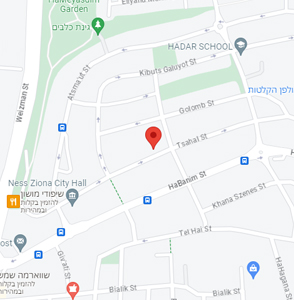
Getting here
17 Tzahal Street, Ness Ziona. Parking near the office, with service on the ground floor. The office is a short drive from Rehovot, Rishon LeZion and Yavne.
Get directions in Google MapsNot sure which certificate you need? Let's start with a conversation
Tell us which authority the document is intended for and for what purpose, and we will tell you exactly which notarial certificate you need, whether an apostille is required and in what order, and how much it will cost under the regulations.